
This user isn't following anyone yet.

Coloring pages you can make your own: Simple activity ideas
A chosen picture can stay a straightforward coloring activity or become the starting point for a small extra idea. You might imagine a story, compare choices within a repeated design, or connect different subjects through a shared theme. This menu offers optional ways to use free printable coloring pages without requiring a finished craft, a lesson, or extra equipment. Pick one route, combine only what helps, or leave the prompts aside. Coloring alone remains a complete choice.
1. Choose the kind of activity you want
Start with what you want to do with the picture. Then choose an extra prompt that gives the activity a useful direction.
1.1 Match a purpose to one optional route
For an imagined moment, try the story route: ask what could be happening in the scene while you color. To notice different choices, compare two permitted uses of one design or two areas on a single sheet. To move between subjects, look for a shared shape, setting, or idea.
There is no preferred order. Choose the route that interests you now. If a prompt starts to feel like an unwanted assignment, return to the picture itself.
1.2 Check whether the drawing supports that route
Look at visible features before adding a task. A clear focal animal can give a story a starting point. Repeated shapes can support comparison. A recognizable motif can connect one drawing with another. These are hypothetical possibilities, not promises about a particular collection.
The same picture may support several routes, but it doesn't have to support all of them. If a drawing lacks a background, ask about its subject rather than inventing a detailed setting. Adapt the prompt to the page you already chose instead of forcing another download to make the activity work.
2. Give a scene an optional story
A story can begin with one visible detail. It can remain a thought you hold while coloring, with no written or spoken answer.
2.1 Ask one question about the moment
Imagine a fox beside a path. “Where might it be going?” starts from something visible while leaving the answer open. A window might suggest “What could happen outside?” An abstract shape might suggest “What does this remind you of?” Choose one question rather than building a long sequence.
Your interpretation belongs to the activity; it isn't a claim about the artist's intended story. Color the parts you want to emphasize and leave the rest open. You don't need to name the character, complete a plot, or explain the result to anyone.
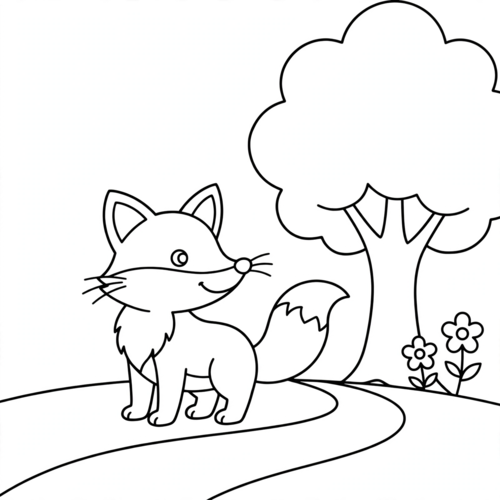
Friendly fox on curved path with large tree and flowers
2.2 Let choices suggest a scene without adding rules
Colors can suggest a time of day or an imagined place without requiring a prescribed palette. You might picture a quiet evening around a familiar subject or give an ordinary scene an imaginary setting. You can also keep the subject realistic and let the question remain unanswered.
This route isn't a blending lesson or a test of how clearly a story appears. Leave areas blank if they don't interest you. If the imagined scene stops adding anything to the experience, keep coloring without it. The picture doesn't need to prove that you followed the prompt.
3. Compare two uses of the same design
Keeping the underlying shapes stable can make different choices easier to notice. Use another copy only when the resource permits that use.
3.` Change one idea between the two versions
Choose a single difference: a bright or muted mood, for example, or greater attention to the subject in one version and the background in another. You are choosing an emphasis rather than reproducing a prescribed result. Everything else can vary naturally as you work.
If another permitted copy isn't available, use two areas of one sheet or recall a previous version. When working with free coloring pages pdf format, broad repeated wing areas on a butterfly could provide a single-sheet comparison. The useful action is making a different choice you can notice, not producing matching finished pictures.
3.2 Notice differences without ranking the results
Look at what attracts your attention first. Which area feels more prominent? Which choice do you prefer today, and what might you keep another time? These questions describe your response rather than declaring a winner.
Both versions can remain incomplete. A color that appeals in one area may not be what you want elsewhere, and a preference can change. An uncolored line drawing supplies only the underlying shapes; any actual color differences come from your later choices. You don't need an ideal example to copy or a better version to display.
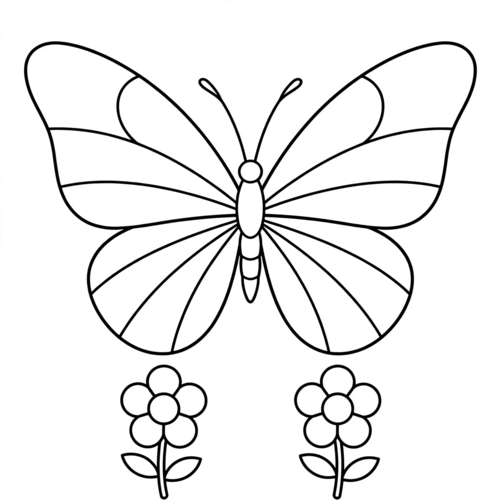
Large butterfly with broad wings and two flowers below
4. Connect different coloring pages with a shared idea
Different subjects can share a loose connection. That connection can guide a choice without turning the drawings into a required set.
4.1 Link a subject, shape or setting across drawings
Round flower centers might connect with round geometric forms. An animal might connect with an imagined habitat, or a window scene with an outdoor view. Treat these as possible pairings rather than claims that a resource offers the exact designs.
Choose one connection you can point to, then decide what it changes about your coloring. You might emphasize circular areas in both drawings or carry an imagined setting from one to the next. If the connection changes nothing you want to do, it can remain a passing observation.
4.2 Change or drop the connection when it stops helping
The next drawing can share a mood, a loose shape, or nothing at all. You don't have to find a perfect companion for the first page. You can move from an imagined story to simple coloring, choose fewer areas, or stop before selecting another picture.
A theme is useful while it supports your interest. It doesn't create a project you must complete. Let a new subject stand on its own when the earlier connection becomes distracting, and keep only the parts of the idea that you still want to use.
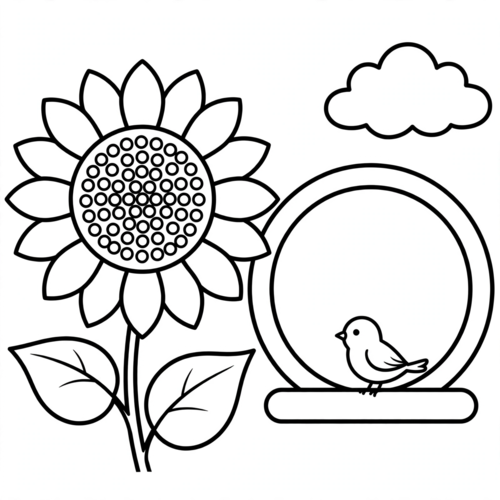
Sunflower beside round window with small bird on sill
5. Choose a resource at ColoringPagesCreative
ColoringPagesCreative is a resource for browsing coloring pages, with collections and discovery sections on its homepage. Look for a drawing whose visible subject or shapes suit the activity you want to try. These optional ideas don't promise specific collections or finished results. Before beginning, inspect the individual resource's offered format, any paper-size guidance, and usage terms, especially when you want another copy for comparison. One suitable picture can support an activity without requiring a coordinated set.
5.1 Select visible features for your chosen route
Start from a collection or discovery section, then inspect a resource that interests you. For a story, look for a subject or moment you want to imagine. For comparison, look for areas where you could make noticeably different choices. For a theme connection, identify the motif that links your ideas.
You don't need activity filters, prepared bundles, or a particular subject to use this approach. If the selected drawing supports a simpler version of the prompt, use that version. The activity should follow what is visible in the picture.
5.2 Check use details before preparing another copy
Confirm the actual offered format and any download or print option before preparing a copy. Use the resource's paper guidance when available rather than assuming a size from the audience or appearance. Check whether your intended additional use is permitted.
Availability alone doesn't answer questions about multiple copies, classroom use, or redistribution. If another copy isn't clearly permitted or useful, choose the single-sheet comparison described earlier. You can also switch to the story route, which doesn't depend on a duplicate. Let the available information shape a workable activity.
6. Try one prompt and keep room to change
You don't need all three routes for a satisfying picture. Begin with the question, contrast, or connection that interests you. If it becomes distracting, simplify it. A partly colored sheet or an abandoned prompt doesn't require a replacement project.
Choose one of the printable coloring pages pdf options that interests you, then try a story prompt, a small comparison, or a loose theme connection. Use only the extra idea that helps you enjoy the picture. You can change the prompt, leave part of the design unfinished, or keep the session to coloring alone.
Further Reading:
Printable Coloring Pages PDF With Insects for Curious Nature Explorers
Free Printable Coloring Pages With Dinosaurs Ready To Roam Again