-
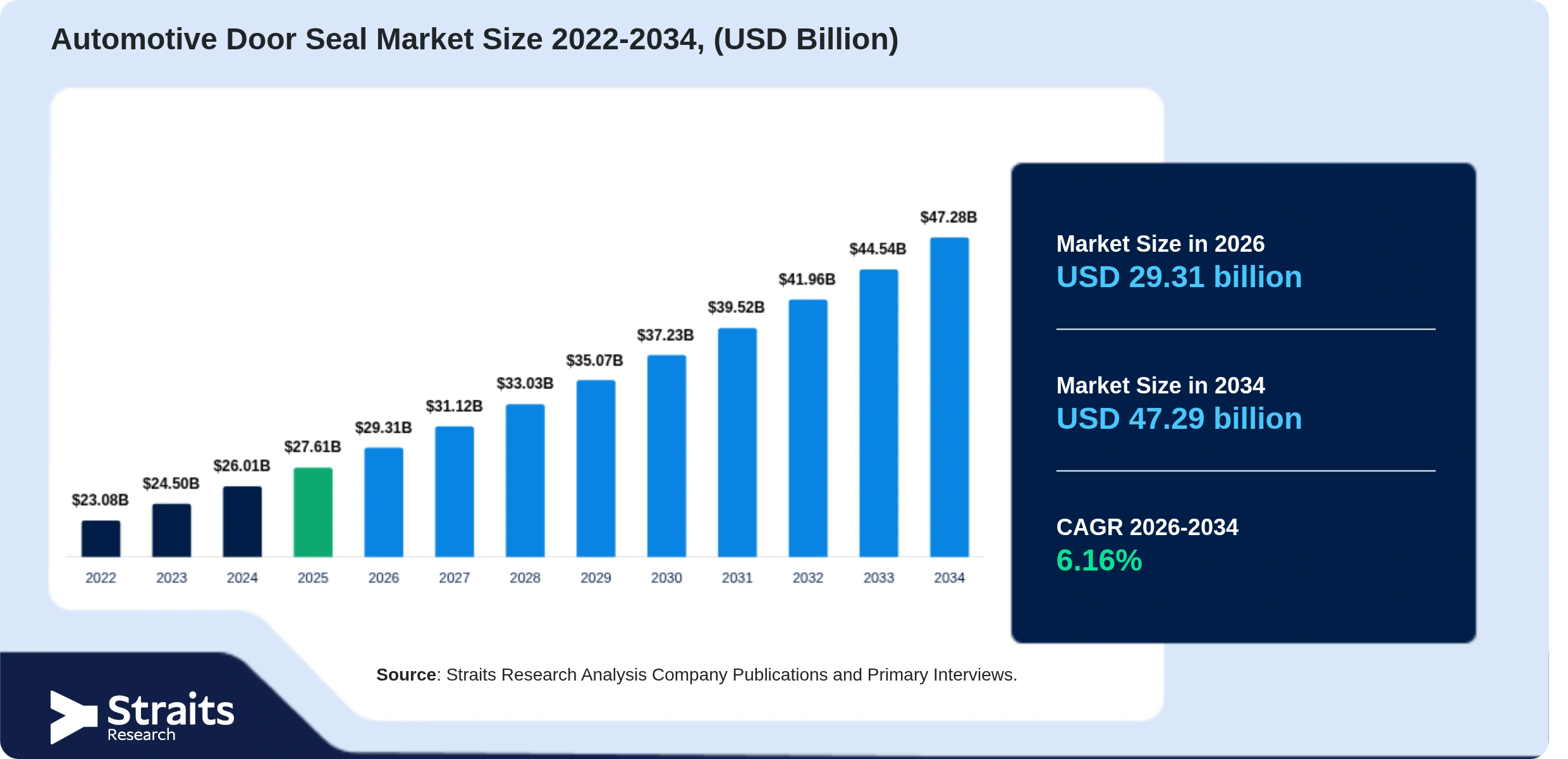
According to Straits Research, the automotive door seal market size was valued at USD 27.61 billion in 2025 and is projected to grow from USD 29.31 billion in 2026 to USD 47.28 billion by 2034, registering a CAGR of 6.16% during the forecast period (2026–2034). Asia-Pacific accounted for 42.3% of the market share in 2025, supported by its established automotive manufacturing base, vehicle production capacity, and extensive component supply chains.
Automotive door seals are protective components installed around vehicle doors to prevent water, dust, air, and external noise from entering the cabin. They improve passenger comfort by reducing noise, vibration, and harshness (NVH), while supporting weather protection and thermal insulation. Their performance is particularly important in electric vehicles, where effective sealing helps minimize road and wind noise.
Automotive Door Seal Market Drivers
Vehicle Comfort and Noise ReductionAutomakers are prioritizing cabin comfort through improved insulation and noise-control components. Automotive door seals minimize external noise, prevent water leakage, and maintain consistent cabin conditions. Consumer preference for quieter and more comfortable vehicles encourages manufacturers to integrate high-performance sealing systems into new vehicle designs.
Electric Vehicle Production and Specialized Sealing Requirements
Electric vehicles require effective sealing solutions to manage cabin noise, air leakage, and thermal performance. The absence of conventional engine noise makes road and wind sounds more noticeable, increasing the importance of advanced door seals. Automakers are adopting lightweight, durable, and high-performance materials to meet these requirements.
Automotive Door Seal Market Trends
Advanced Rubber and Foam MaterialsManufacturers are focusing on improved rubber formulations, specialized foams, and lightweight materials to enhance sealing performance. These materials offer flexibility, weather resistance, durability, and noise insulation. Material innovation also enables suppliers to develop products suitable for different vehicle designs and operating conditions.
Lightweight and Sustainable Sealing Solutions
Automotive suppliers are exploring lightweight and sustainable materials to support vehicle efficiency and environmental objectives. Advanced polymer formulations and optimized seal designs can reduce component weight while maintaining durability and weather protection. These developments are relevant as automakers refine vehicle structures and electric mobility platforms.
Automotive Door Seal Market Segmentation Analysis
The market is segmented by material type, application, and end-user.By Material Type
Rubber
Foam
Others
The rubber segment holds a prominent market position due to its durability, flexibility, weather resistance, and cost-effectiveness. Rubber seals provide protection against water, dust, and external noise, making them suitable for different vehicle categories. Improvements in rubber formulations also support performance under varying climatic conditions.
By Application
Passenger Vehicles
Commercial Vehicles
Others
Passenger vehicles represent a major application segment because of their production volumes and emphasis on cabin comfort. Automakers use advanced door seals to improve noise insulation, weather protection, and interior quality. Commercial vehicles also require durable sealing solutions that withstand demanding operating conditions and extended usage.
By End-User
Original Equipment Manufacturers (OEM)
Aftermarket
Original Equipment Manufacturers (OEMs) represent a key end-user category because automotive door seals are integrated during vehicle production. Automakers require components that meet design specifications, durability expectations, and quality standards. The aftermarket also provides opportunities through replacement requirements resulting from wear, aging, and environmental exposure.
Automotive Door Seal Market Regional Insights
Asia-Pacific: Dominant RegionAsia-Pacific accounted for 42.3% of the automotive door seal market share in 2025. Its position is supported by vehicle manufacturing capacity, automotive component production, and established supply chains. China, Japan, and India are important automotive production centers, creating opportunities for manufacturers of rubber, foam, and advanced sealing components.
North America: Regional Growth Opportunities
North America remains an important region for automotive door seal manufacturers, supported by established automakers, vehicle technology investments, and electric vehicle production. The focus on cabin comfort, noise reduction, and weather-resistant components supports the adoption of advanced sealing solutions across passenger and commercial vehicles.
For Detailed Insights, Visit
https://straitsresearch.com/report/automotive-door-seal-market
Automotive Door Seal Market Key Players Analysis
The competitive landscape includes automotive component manufacturers and specialized sealing solution providers. Companies compete through material innovation, product durability, manufacturing capabilities, customized designs, and supply agreements with vehicle manufacturers.Trelleborg AB (Sweden)
Gold Seal Group (U.K.)
Avon Group (U.K.)
PPAP Automotive Limited (India)
Bohra Rubber Pvt. Ltd. (India)
Opportunities in the Automotive Door Seal Market
Electric Vehicle-Specific Sealing SolutionsManufacturers can develop specialized door seals for electric vehicle platforms, focusing on noise insulation, lightweight construction, weather resistance, and thermal performance. Partnerships with electric vehicle manufacturers can help suppliers introduce customized sealing systems for different vehicle architectures.
Replacement and Customized Aftermarket Products
Aftermarket suppliers can strengthen their portfolios through vehicle-specific replacement seals and customized sealing solutions. Durable materials, accurate fitting, and compatibility across vehicle models can help companies serve repair workshops, distributors, and individual vehicle owners.
Final Thoughts
The automotive door seal market remains closely connected to vehicle production, passenger comfort, and advancements in automotive materials. Electric vehicle requirements, noise insulation, and lightweight component development are shaping product innovation. Manufacturers focusing on durable materials, customized designs, and strong OEM relationships can strengthen their competitive position during the forecast period.About Us
Straits Research is a market research and intelligence organization that provides industry insights, market sizing, competitive analysis, and strategic research across various industries. The company supports businesses, investors, and decision-makers with data-driven information to help identify market opportunities, understand industry dynamics, and make informed business decisions.